
Call now(720) 600-6733
Day to day it's the insulation you notice. Bare R-0 to R-2, polystyrene R-6 to R-9, polyurethane R-12 to R-18. Stiffer and much quieter.
Tell us what the door is doing. Free estimate, no strings.
A door at the end of its life is the fault we're called out for most often in Denver, and it is the one homeowners least expect. In Denver County, you see nothing, hear nothing, and then one morning the door won't budge and your car is on the wrong side of it. Around Park Hill and Washington Park we see it concentrated in 1950s brick ranches and bungalows in the older neighborhoods, big two- and three-car garages on the newer builds out east, where hail dents panels and the freeze-thaw swings crack old lubricant and stiffen springs.
Installing a door is four jobs. Width, height, headroom and backroom are all measured first. The old door, track and springs come out. Track is set true to the opening, plumb and square. Never reused, never adjusted to suit the old door. The door goes up a panel at a time, hinged and strutted, and the spring is sized once the finished weight is known. Skip that last calculation and the new door punishes its opener from the first week.
Denver, Aurora, Lakewood, Arvada, Littleton, Englewood, Thornton and the rest of Denver County are all inside the normal radius. Free to come out, and nothing happens until you've decided.
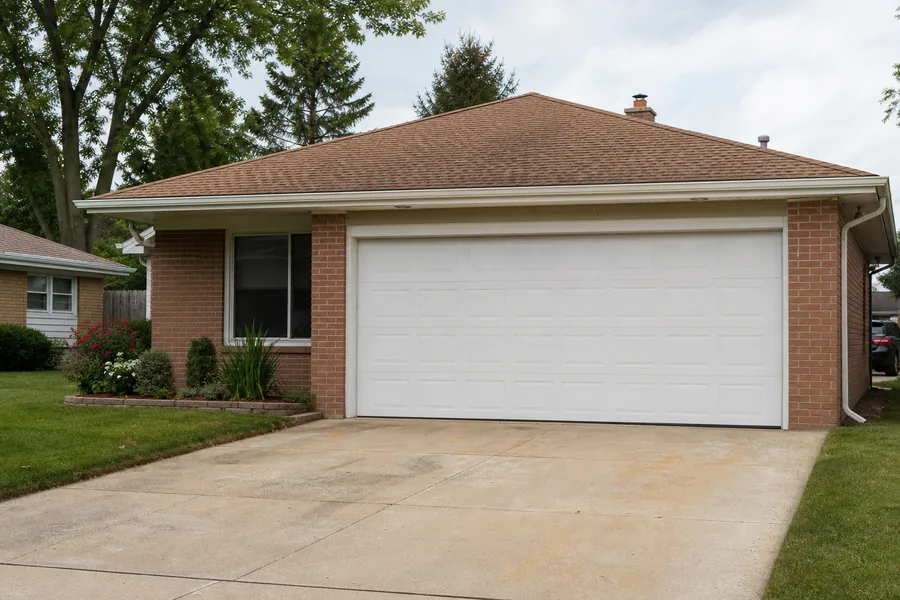
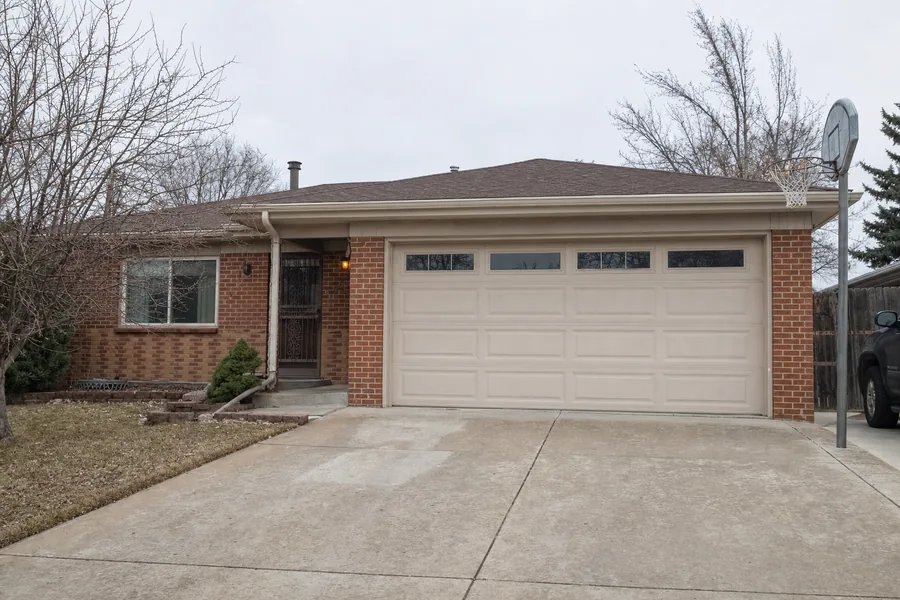
Across Denver County, replace when the panels are gone: rot, rust through the skin, or impact damage across more than one section. Replace when the garage is a room you use and the door is single-skin. Once repairs come more than once a year, replace: you're buying a door in pieces and never getting the door.
If any of that sounds familiar, a technician can confirm it on site in about ten minutes. Rather than guess over the phone, we come and look, free.
Most spec differences are invisible once the door is up. Insulation isn't. An uninsulated door sits around R-0 to R-2, a polystyrene core around R-6 to R-9, and a polyurethane door from R-12 up to R-18. The polyurethane option is stiffer and noticeably quieter too.
Only when it is old or already misbehaving. If it has years left, it stays. Changing it while the door is off is almost no extra work, which is worth knowing before you choose.
Sometimes it will, physically. It is still the wrong thing to do. Track gets set plumb and square for the new door, because twenty-year-old track worn to a different door is the usual cause of a noisy new one.
None of that is unique to Denver. It's the natural result of guessing at a door over the phone. So we don't guess; we send somebody to look first.
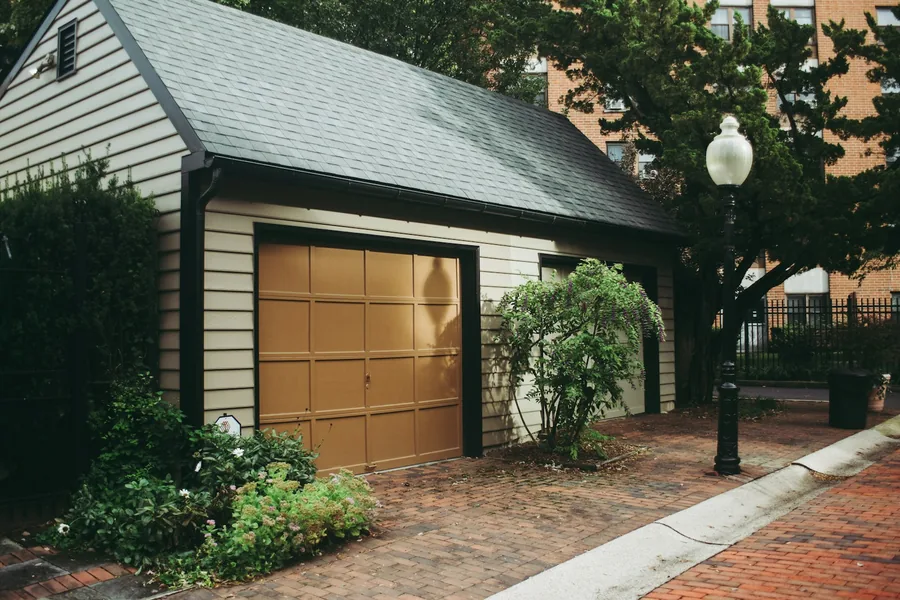
It gets postponed a lot, so it's worth saying plainly what postponing leads to. None of the following is unusual. It's the ordinary sequence, and we see it in Denver every week.
The estimate is free, so finding out where you stand asks nothing of you. Call early and you avoid all of that.
A steel door lasts twenty to thirty years. The parts around it don't. Springs, rollers and cables wear out on a door built to last decades, which is why a door that looks fine can need work three or four times in its life.
Insulation is rated as an R-value, and that number decides whether the garage is usable in winter. An uninsulated door is roughly R-0 to R-2, a polystyrene-core door about R-6 to R-9, and a polyurethane door R-12 to R-18. The polyurethane ones are stiffer and quieter as well.
If the opener is old, swap it while the door is down. The labor overlaps almost entirely. If it has years left, it stays. Since the door is being built from parts, nylon rollers are the obvious choice at the same time.
Of all the measurements, headroom is the one that surprises people. How far it is from the top of the opening up to the ceiling. Standard torsion needs about twelve inches. You can get low-headroom track, provided it's specified at order time and not on install day.
Doing nothing really is the right move here, which is not advice people expect to hear. Sitting still, a failed door stays put. Each press of the button to "check" adds damage.
The one exception is getting a car out. Release it closed, lift with your legs, and if it feels heavy, stop right there. Heavy in the hand means no counterbalance, and the door will fall on its own.
With a broken spring or cable, no. Leave it down and don't force it. A wound spring carries a lot of stored energy and gives no warning before it releases.
The tells are simple: repeated repairs, damage across several panels, or an uninsulated single-skin door on a garage that doubles as a room.
If the opener is close to ten years old, yes. The labor overlaps almost entirely while the door is off, and a new unit is quieter and carries its own warranty.
Yes. We come out and tell you what has failed, anywhere in Denver County, with no obligation either way.
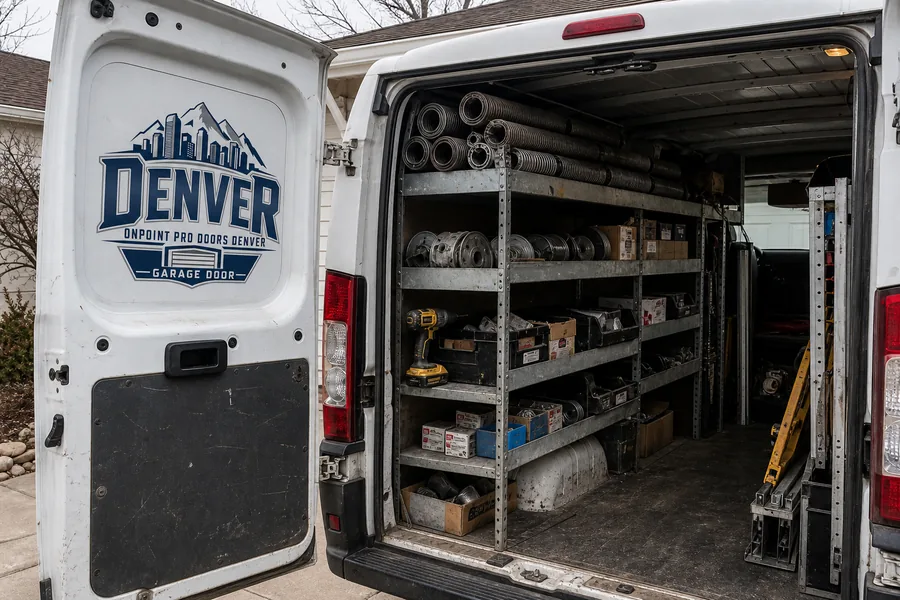
Yes. Whether it's a LiftMaster, a Chamberlain, a Genie, a Craftsman, a Clopay, an Amarr or a Wayne Dalton, we work on it. The mechanisms are much the same from brand to brand, and the van carries parts for all of them.
Yes. A real dispatch, not a callback in the morning. Whatever time you call, it's handled then.
If the door in your Denver garage is doing any of the things on this page, the fastest route to an answer is a phone call. Tell us what the door is doing and you'll get an honest answer on whether it needs someone today or can wait a few days.
No call center, and no obligation. We cover Denver and Aurora, Lakewood, Arvada, Littleton, Englewood, Thornton.
A two-hour slot, and a call on the way. Free throughout Denver County, with no obligation either way.
Prefer to talk it through? Call (720) 600-6733.
Tell us what the door is doing. Free estimate, no strings.