
Call now(720) 600-6733
Motor runs, door does nothing? That's a stripped nylon gear, and a gear kit is a part, not a new opener. We diagnose before we sell.
Tell us what the door is doing. Free estimate, no strings.
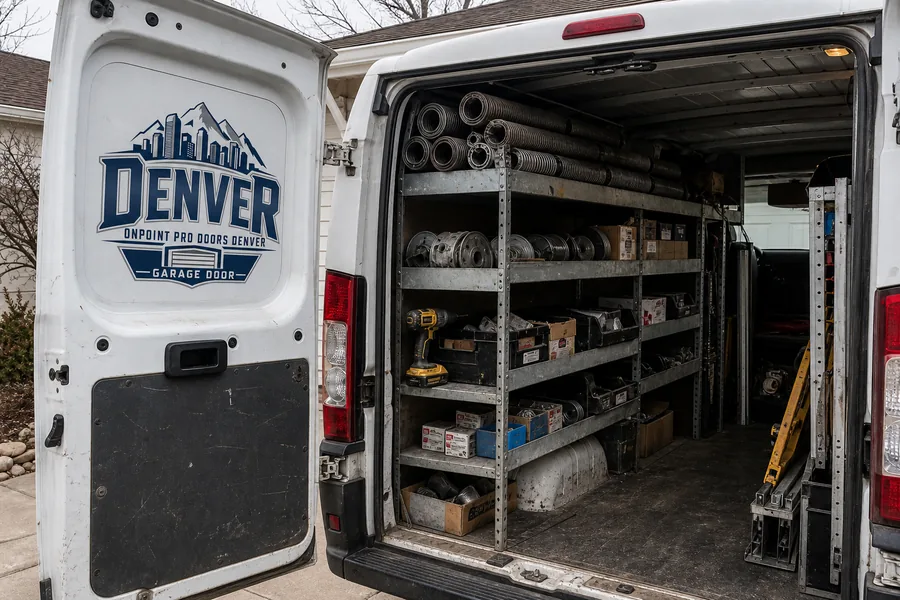
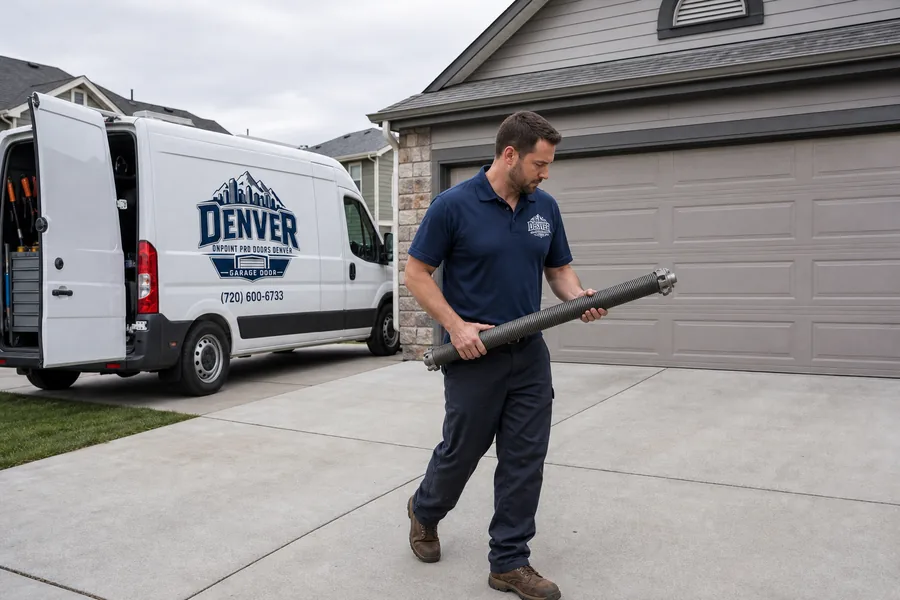
Most garage door opener repair calls we take in Denver start the same way. The door moved fine yesterday. That is normal. The parts that fail here carry the door's weight, and parts under that kind of load go suddenly, not gradually. In Denver, hail dents panels and the freeze-thaw swings crack old lubricant and stiffen springs, which is why we carry the parts for it on the van rather than ordering them in.
An opener doesn't lift anything. It moves a door that weighs nothing, thanks to the spring, and holds it still. The motor turns a worm that drives a nylon gear, and that gear is soft by design. It's built to fail first. A stripped gear is a quick job; a burnt motor or a bracket ripped off the door isn't.
Free estimate anywhere in Denver or Aurora, Lakewood, Arvada, Littleton, Englewood, Thornton. Should you choose not to proceed once you've seen it, nothing more happens.
The clue is sound without movement. The motor runs for its usual few seconds, sounding fine, and the door stays exactly where it is. That is the gear. A kit replaces it; you don't need a new opener. Look up at the rail: the trolley isn't moving either.
If any of that sounds familiar, a technician can confirm it on site in about ten minutes. Rather than guess over the phone, we come and look, free.
Safety reversal is the part that matters. Since 1993 openers have carried photo eyes by the floor; when the door doesn't reverse on a broken beam, that's serious. It's the safety system not working. In Denver and the towns around it, every visit includes a reversal test, called for or not.
Don't touch it. Unplug the opener if you have to. Most large repairs started small and were run for two more days.
Need the car? Door fully down first, then the red cord, then a steady lift. If both hands can't move it easily, nothing will, and pushing harder hurts people.
It gets postponed a lot, so it's worth saying plainly what postponing leads to. None of the following is unusual. It's the ordinary sequence, and we see it in Denver every week.
The estimate is free, so finding out where you stand asks nothing of you. Call early and you avoid all of that.
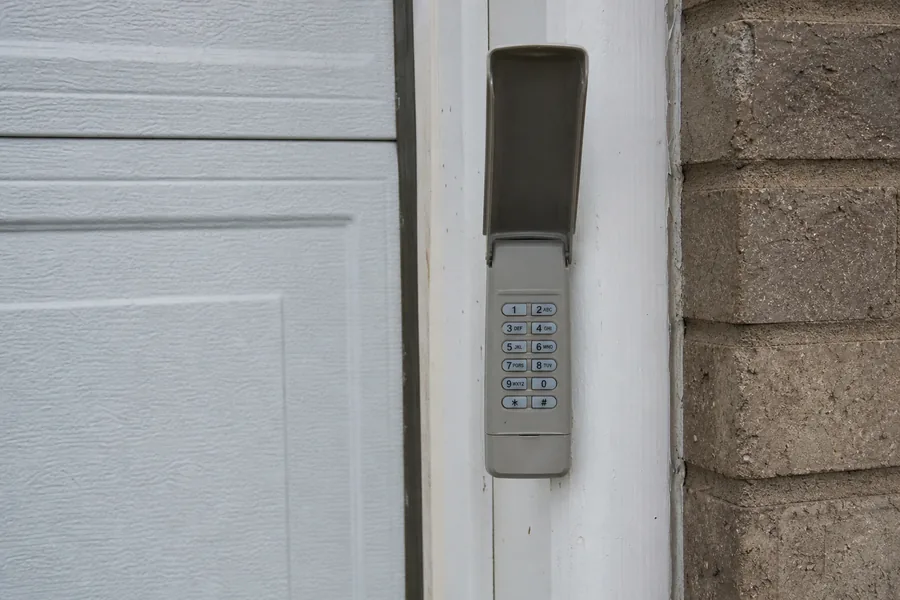
The remote needs the right frequency and the right rolling-code generation. Get either one wrong and nothing pairs. A new Security+ 2.0 remote won't talk to a 315MHz opener from the nineties, and the old remote won't talk to a new head either. The model number is on the back of the motor housing. Give it to us on the phone and we bring the correct one.
No. The opener only guides the door, and treating it as the muscle is how people wreck them. The spring does the lifting; the opener moves what should feel like a weightless door. If the opener labours, look at the spring. A new motor lifting the same badly balanced door will labor too.
Opener service calls are repetitive. Photo eyes knocked out of line, a chewed drive gear, a limit switch that has wandered, or a board that has died cover nearly all of them. Three of them come down to a single part and an hour's work. Before anyone decides anything, you will be told which of the four faults it is.
None of that is unique to Denver. It's the natural result of guessing at a door over the phone. So we don't guess; we send somebody to look first.
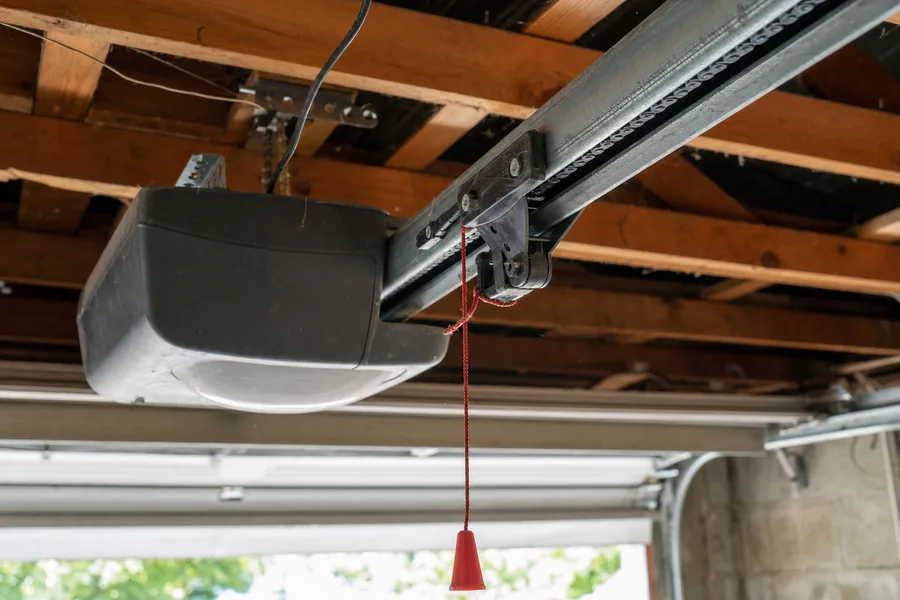
A chain-drive opener runs 12 to 15 years. A belt drive runs about the same but quietly. Load kills them early, not age. An opener that has spent a year hauling against a weak spring has worked several times harder than it was designed to, and the gear inside is plastic.
Four faults cover most of what we see: photo eyes knocked out of line, a stripped drive gear, a drifted limit switch, and a failed logic board. The first three are a part and an hour. Only the fourth sometimes means a new opener, and you'll know which one it is before deciding anything.
Fifteen years old, board gone: honestly, replace it. A modern head is quiet, secure with rolling codes, and warranted on its own. Telling you that beats selling you a board for a motor with months to live.
Openers usually fade before they fail: a bit slower, a hum, a button press that needs repeating. People only notice the day it stops altogether.
Yes, on parts and labor. If the same fault comes back within the warranty period, we return and sort it.
Yes, every hour of every day of the year. A car shut in at 5am before work is a same-hour visit, not a same-day one.
Nearly always a repair. The parts that fail are parts we stock. The one time we'll say replace it is a dead board on an opener that's already fifteen years old.
Yes - Aurora, Lakewood, Arvada, Littleton, Englewood, Thornton and the wider Denver County area are all inside our normal service radius.
Plan on one visit. A garage door opener repair job normally takes an hour or two, parts included.
If the door in your Denver garage is doing any of the things on this page, the fastest route to an answer is a phone call. Tell us what the door is doing and you'll get an honest answer on whether it needs someone today or can wait a few days.
No call center, and no obligation. We cover Denver and Aurora, Lakewood, Arvada, Littleton, Englewood, Thornton.
Tell us the symptoms and we'll give you a window, not a guess. The visit and the estimate is free, anywhere in Denver County.
Prefer to talk it through? Call (720) 600-6733.
Tell us what the door is doing. Free estimate, no strings.