
Full-view glass doors have become a fixture on the modern homes and rebuilt bungalows along the Front Range, and on garages that double as gyms and studios. We measure, order and install them with the hail, the strong sun and the foothill gusts in mind, and the estimate is free.
Tell us the symptoms. Free estimate, no strings attached.
A full-view door is an aluminum grid filled with glass or clear polycarbonate. It runs on the same tracks, springs and openers as a steel sectional door, but from the street it looks more like a storefront window than a garage door, which is why architects keep drawing them onto new houses.
Owners pick them for two reasons. On a modern front, a raised-panel door looks out of place. And when the garage turns into a home gym, a bike workshop or a studio, the daylight changes the room completely.
They are not only residential. Restaurants, taprooms and showrooms use the same doors to open a room to the sidewalk on a warm evening and close it tight when the weather turns, and those doors run, lock and wear like any other sectional door.
Anyone who has lived through a few summers here asks about hail before anything else, and the question deserves a straight answer. Tempered glass is far tougher than household window glass and breaks into small, dull pieces if it does fail, yet a large enough stone can still crack it.
Polycarbonate panels are the hail-country choice. They look nearly identical from the curb and take hits that would break glass, though they scuff more easily over the years. Laminated glass is another route; it cracks but stays in one piece.
Plenty of owners split the difference: polycarbonate in the lower sections that catch hail and stray balls, glass higher up. Whatever the mix, a broken or scuffed panel is swapped by itself and the door stays.
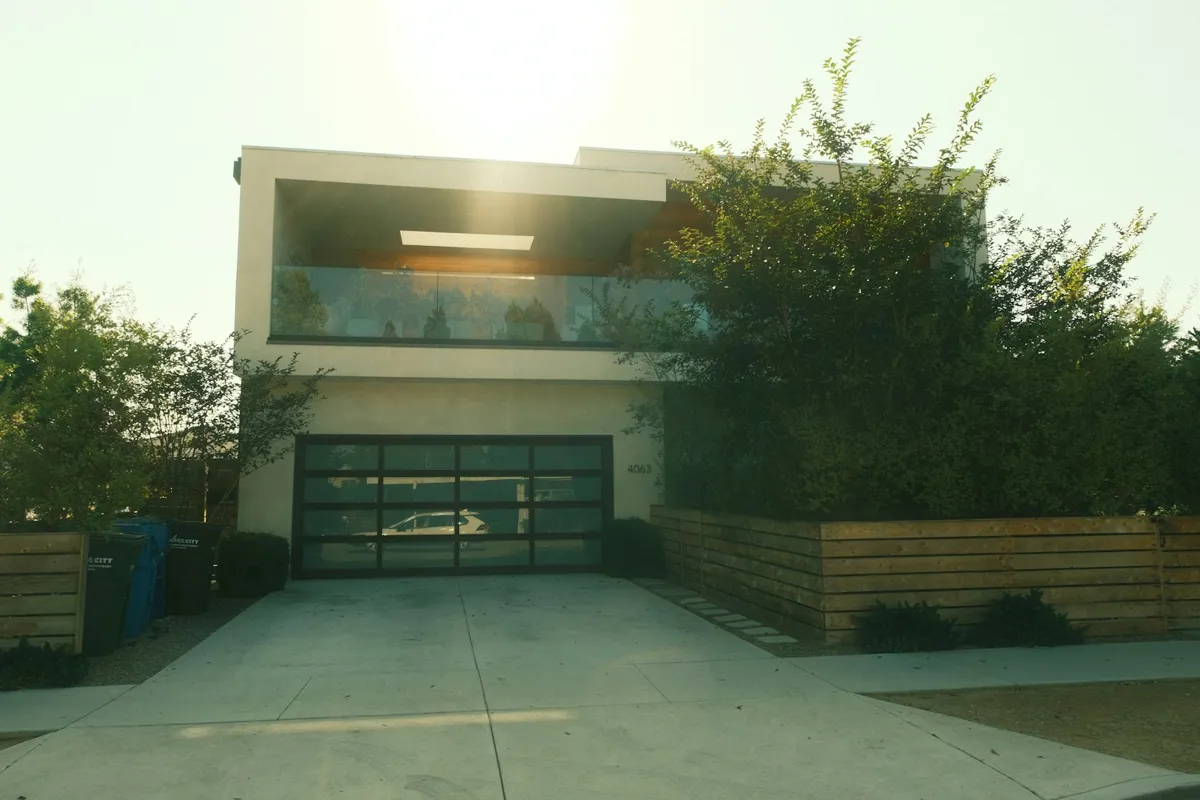
The sun at this altitude is intense, and a west-facing glass door takes it full on through the afternoon. Tinted or low-glare panels keep the garage from turning into a greenhouse and keep the glare out of the house across the street.
The aluminum can stay clear-anodized or be finished in black, bronze or white; the darker two outline a modern house sharply, while the lighter ones stay cooler in direct sun. Frosted and obscure glass let the light in while keeping bikes, tools and the car out of view.
Samples come to the house, because a frame color looks different against your own brick or stucco than it does in a brochure.
On a two- or three-car garage, the glass door does not have to cover every bay. A common choice is a full-view door on the bay that serves as a gym or workshop and steel doors on the others, with frame and door colors chosen to sit together.
Out east, where most streets have a homeowners' association, the board usually gets a vote on door style and color. Bring them the frame finish, glass type and a drawing before ordering; the technician supplies all three.
Glass doors are not only for new construction. Owners rebuilding an older bungalow often want the alley garage to match, and because these doors are made to measure, an opening narrower or shorter than today's standard sizes is no obstacle.
The alley side does raise privacy, and frosted or obscure glass is the usual answer: the garage still fills with light, but nobody walking the alley sees what is stored inside. At night a lit garage behind clear glass glows like a display case, so the choice is worth making with the evening in mind.
Older detached garages also get their frame checked before ordering. A new door needs sound jambs and a solid header to fasten to, and any rotten wood is listed on the estimate as its own line.
Next to an insulated steel door, glass lets more heat through in both directions, and that is worth knowing before you choose. A garage under a bedroom feels the difference on a January night and on a July afternoon.
Insulated double-pane panels close much of that gap, keep the glass clearer on cold mornings and dull the street noise. The edges count too. A bottom seal that sits evenly on the slab, plus weatherstripping up the sides and across the top, keeps drafts and blowing snow outside.
If the garage is only for cars and storage, single glass is usually fine and keeps the door lighter.
These doors are made to measure, so the first visit settles everything.
The gusts that come down off the foothills push hard on a wide door, glass or not. Wide full-view doors get the reinforcement and track bracing the maker calls for, fastened into solid framing rather than old, split jambs.
A door full of glass, and especially insulated glass, is often heavier than the steel door it replaces. Springs are sized to the new door once it is hung, and the opener is checked against that weight. A unit that barely coped with a hollow steel door may labor on cold mornings with a heavier one; if so, the estimate says it plainly.
Tempered glass is tough but a big stone can crack it. Polycarbonate shrugs off far more, and a single damaged panel swaps out on its own.
Yes. Many owners use a full-view door on a gym or workshop bay and steel doors on the rest, with colors chosen to match.
On a sunny face it can. Tinted or low-glare panels and a lighter frame color help, and insulated glass evens out both heat and cold.
Many associations set rules on door style and color. It is worth checking before ordering, and we can provide the details they ask for.
Usually. Full-view doors are built to the opening, and the frame is checked and repaired first if the wood around it has weathered.
Wide doors get the reinforcement and track bracing the maker specifies, fastened into sound framing.
At the measuring visit the opener is matched to what the new door will weigh, and a stronger one comes up only if it is truly needed.
Yes. Measuring, the options and the written free estimate are all free, and the order waits for your go-ahead.
Describe the fault and we'll give you an honest arrival time. The visit and the estimate is free, wherever you are.
Would rather call? Call (720) 600-6733.
Tell us the symptoms. Free estimate, no strings attached.